Industrial Pump Supplier Brazil
Industrial Pumps for Brazilian Industrial Applications
Industrial pumping requirements can vary significantly depending on the fluid, flow rate, pressure, operating temperature and installation conditions.
Alliance Industrial Products supplies industrial pumps from India for international applications, including requirements in Brazil. The range includes End Suction, Split Casing, Slurry, Vertical Turbine and Fire Fighting Pumps for applications across industrial and infrastructure sectors.
Pump Range
Pump Types for Different Industrial Requirements
Choosing the right pump configuration starts with understanding the application and the required duty point.
End Suction Pumps
A practical centrifugal pump configuration used across various water transfer, circulation and industrial fluid-handling applications.
Split Casing Pumps
Split casing pumps are commonly considered for applications requiring substantial flow capacity. Their construction can also provide convenient access to internal components during maintenance.
Slurry Pumps
Designed for applications involving fluids containing suspended or abrasive solids. Pump selection should consider particle size, solids concentration, density and the abrasive characteristics of the slurry.
Vertical Turbine Pumps
A vertical pump configuration used where the installation arrangement or water source calls for a vertical pumping solution. Application requirements can include water intake, transfer and other fluid-handling duties.
Fire Fighting Pumps
Used as part of fire protection pumping systems. Selection depends on the required flow, pressure, duty conditions and the specifications of the overall fire protection system.
Selection Parameters
Pump Selection Starts With the Duty Point
A pump should be selected around the actual requirements of the system rather than simply its maximum possible capacity.
| Parameter | What to Check |
|---|---|
| Flow Rate | Required volume of fluid per unit of time |
| Head | Static and friction losses the pump needs to overcome |
| Fluid | Water, slurry, chemical fluid or other process media |
| Temperature | Operating temperature of the pumped fluid |
| Pressure | System pressure and required discharge conditions |
| Solids | Concentration, size and abrasive characteristics |
| Viscosity | Resistance of the fluid to flow |
| NPSH | Available suction conditions versus pump requirements |
| Materials | Compatibility with the pumped fluid |
| Duty Cycle | Continuous, intermittent or variable operation |
Technical Note: The pump's duty point should be checked against its performance curve. Operating close to the pump's preferred operating range can help maintain appropriate hydraulic performance and reduce excessive mechanical loading.
Pump Performance
Understanding Pump Head & Flow Rate
Two specifications appear in almost every industrial pump discussion: flow rate and head.
What Is Pump Flow Rate?
Flow rate describes how much fluid the pump moves over a specific period. It is commonly expressed in units such as m³/h, L/min or GPM.
The required flow depends on the process and the amount of fluid that needs to be transferred.
What Is Pump Head?
Pump head represents the energy added to the fluid by the pump. It is commonly expressed in metres of liquid.
Total system head can include static elevation as well as losses caused by pipes, valves, fittings and other components.
A pump therefore needs to be evaluated against the combined system requirement, rather than head being treated as a standalone number.
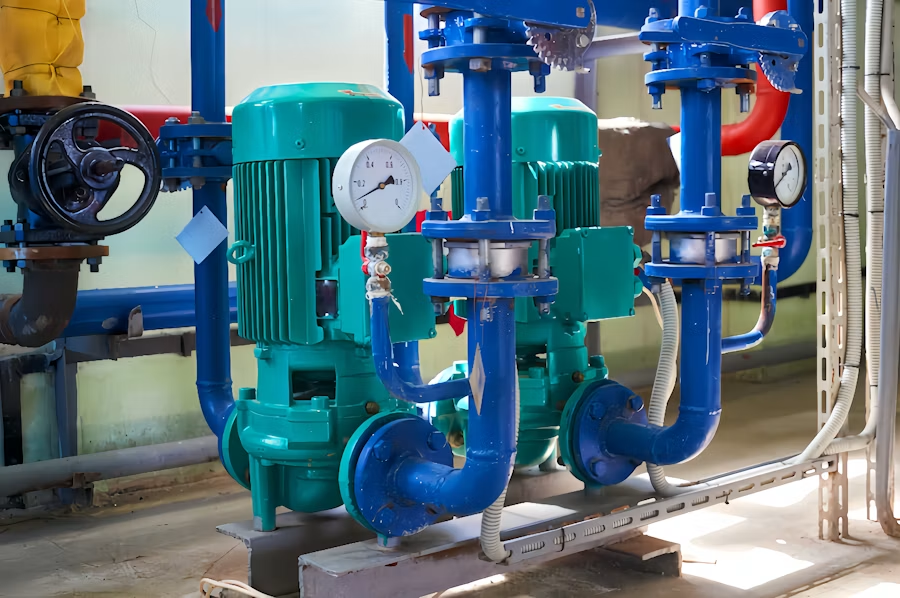
Why NPSH Matters
Net Positive Suction Head (NPSH) is an important consideration when selecting a centrifugal pump.
In simple terms, NPSH relates to the pressure available at the pump suction and the conditions required to prevent excessive vapor formation within the pump.
If the available NPSH is too low compared with the pump's requirement, cavitation may occur.
Possible signs and effects include:
- Noise
- Vibration
- Reduced pump performance
- Damage to internal surfaces
- Increased maintenance requirements
Fluid temperature, suction pipe arrangement, liquid level and system pressure can all influence suction conditions.
Regional Applications
Industrial Pump Applications Across Brazil
Brazil has major industrial and agricultural sectors, creating a wide range of pumping requirements.
Oil & Gas
Brazil's oil and gas sector includes both offshore and onshore operations. Pumping requirements can include fluid transfer, process systems, water handling and other industrial duties.
The specific pump configuration depends on factors such as fluid properties, pressure, flow requirements and installation conditions.
Mining & Minerals
Mining and mineral processing can involve demanding pumping environments, including applications where fluids contain abrasive solids.
Slurry pumps can be considered for suitable duties where wear resistance and solids-handling capability are important selection factors.
Sugar, Bioethanol & Agriculture
Brazil has a major agro-industrial and biofuel sector. Pumping systems can be used for water transfer, irrigation, process fluids and other plant applications.
For higher-viscosity or process-specific fluids, the pump must be selected around the actual fluid characteristics and operating conditions.
Water & Wastewater
Water and wastewater systems can involve pumping for water transfer, treatment processes, effluent handling and industrial water reuse.
Pump selection depends on factors such as flow, head, solids content, fluid characteristics and the treatment process involved.

Sectors
Pump Applications by Industry
Alliance supplies pump options for a range of industrial sectors, including:
Steel
Process water, cooling systems and industrial fluid transfer.
Sugar
Water and process pumping requirements associated with sugar manufacturing and refining.
Power
Water circulation, cooling and other plant fluid-handling applications.
Chemical
Process and utility fluid handling, subject to fluid compatibility and pump specification.
Paper & Pulp
Water circulation, process fluids and other pumping requirements.
Water & Wastewater
Water transfer, treatment and wastewater handling applications.
Mining
Water transfer, slurry handling and other demanding pumping duties.
Oil & Gas
Industrial fluid-handling applications where pressure, fluid properties and project requirements influence pump selection.
Fluid Characteristics
Pump Selection for Different Fluids
The same pump configuration cannot automatically be applied to every fluid. The characteristics of the medium need to be considered during selection.
Clean Water
Flow, head, temperature, suction conditions and duty cycle are among the main parameters to review.
Abrasive Slurry
Particle size, solids concentration, density and wear characteristics become particularly important.
Chemical Fluids
Chemical composition, concentration, temperature and material compatibility need careful consideration.
Wastewater
Suspended solids, debris, viscosity and the characteristics of the wastewater can influence pump selection.
Process Fluids
The process temperature, viscosity, pressure and chemical properties should be reviewed alongside the required flow and head.

Sourcing Support
Why Source Industrial Pumps from Alliance?
Multiple Pump Configurations
Alliance supplies different pump types for varying flow, head, installation and application requirements.
Technical Selection Support
Share your application and operating details with our team to discuss suitable pump options.
Industrial Product Range
Alliance also supplies electric motors, valves, gearboxes, switchgear and industrial instruments for industrial applications.
International Supply
Alliance supplies industrial equipment from India to customers across international markets, including Brazil.
Application-Based Selection
Pump requirements can be reviewed around flow, head, fluid properties, temperature, solids content, suction conditions and duty cycle.

Need an Industrial Pump for a Brazilian Application?
Looking for an Industrial Pump Supplier in Brazil for a new project, replacement requirement or industrial application?
Alliance Industrial Products supplies industrial pumps from India for international markets, including Brazil. Pump specifications, product availability and delivery arrangements can be discussed according to the specific requirement.
Frequently Asked Questions
1. How do I select the right industrial pump?
Start by identifying the required flow rate and total head. Then consider the fluid type, temperature, viscosity, solids content, suction conditions, operating hours and installation arrangement. The pump performance curve should be checked against the required duty point.
2. What is pump head?
Pump head represents the energy added to the fluid by the pump and is commonly expressed in metres. The required system head can include static elevation and losses through pipes, valves, fittings and other components.
3. What is pump flow rate?
Pump flow rate is the volume of fluid moved by the pump over a specific period. Common units include m³/h, L/min and GPM. The required flow rate depends on the process or transfer requirement.
4. What is NPSH in a centrifugal pump?
NPSH, or Net Positive Suction Head, relates to the suction conditions available to a pump. The available NPSH should be sufficient for the pump's requirements. Insufficient suction conditions can contribute to cavitation.
5. What is a split casing pump used for?
Split casing pumps are commonly used for applications requiring relatively high flow rates, including water transfer and circulation duties. Their construction can also make internal inspection and maintenance more accessible.
6. When are slurry pumps used?
Slurry pumps are used for suitable applications involving fluids containing suspended or abrasive solids. Mining and mineral processing are examples where slurry handling can be required. Particle size, solids concentration, density and abrasiveness should be considered when selecting the pump.